


Last week I wrote about a ribbon-cutting I planned to attend on Georgia Avenue, and about the questions I had never asked the people I knew there. On Saturday, September 19, I went and asked.
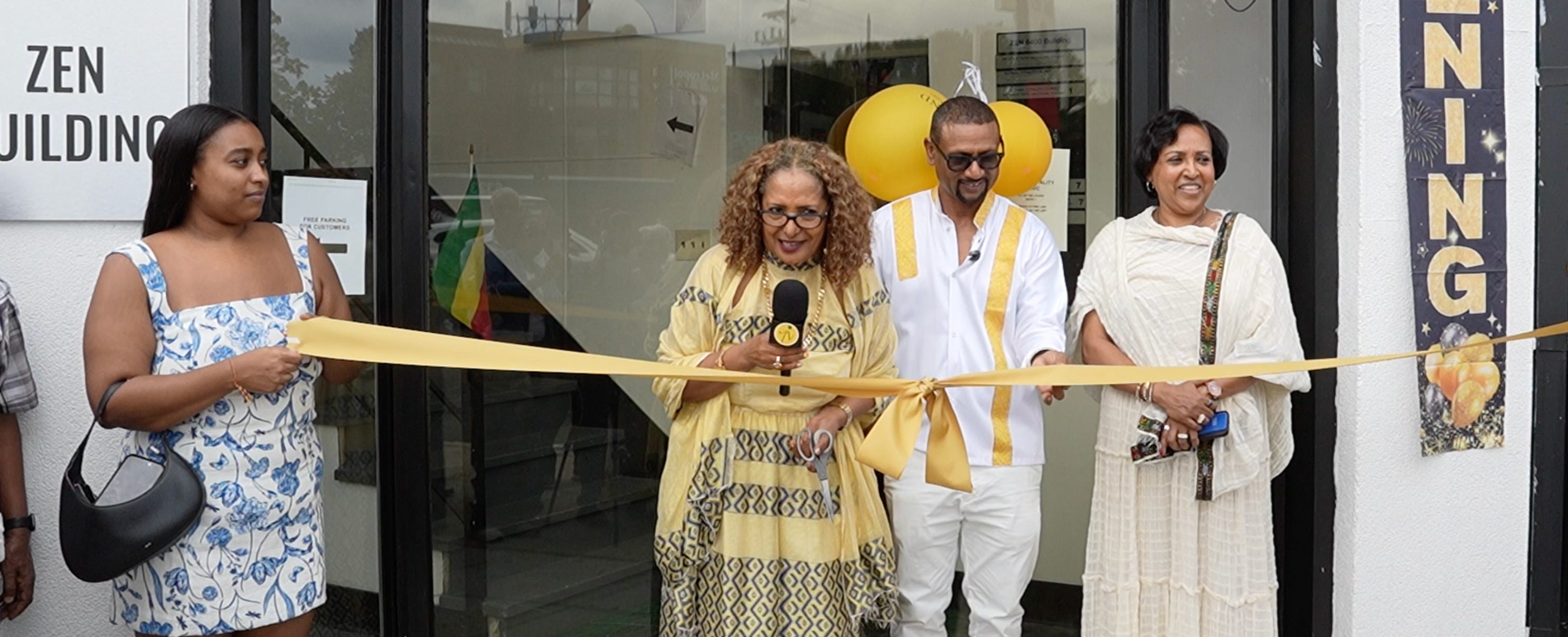
Zenebech Mengistu, Dr. Nigussie Geleta, and Dr. Eden Taye were opening a newly acquired facility in Ward 4. During the ceremony, Dr. Eden told the crowd that opportunities don’t keep knocking forever. When one appears, you have to recognize it and move.
Afterward, I asked Dr. Nigussie how they got there.
He told me the three partners didn’t know each other a year ago. They came from different directions. One runs a restaurant, and two are doctors. What brought them together was a shared vision and a willingness to take a risk.
What struck me most was how he talked about trust. Goodwill, he said, takes the first half step. But everyone in a partnership is putting their livelihood and property on the line, so goodwill isn’t enough on its own. They agreed on it, then put it in writing and in law, and only then started working together.
He didn’t pretend it would be easy. He compared partnership to marriage: there will be clashes, especially over money, and it takes a big heart to carry each other through the hard days. If you go in knowing there will be falls as well as rises, he said, you can make it.
He also challenged a habit he sees in our community. Back home, when one person opens a shop, others open the same kind of shop right next to it, as if the market were already used up. Here, he said, the opportunity is big. The answer isn’t to crowd into the same thing but to bring different skills and perspectives together.
Those same questions kept coming back to me from the other direction, changing slightly.
Everyone is asking what’s next
“What happened to that shareholder thing?”
A fellow parent asked me that recently. “I want to be a shareholder,” he said. “Don’t forget me.”
I understood why he asked, and I was glad he cared. But I had to be honest with him, and I want to be just as honest here. There is nothing to be a shareholder in. There may never be. Right now, this is a learning process, and I don’t yet know what, if anything, it will become.
He was asking about BUHE, which stands for Built Here with Ethiopique. BUHE is how we help Amharic-speaking families in the DMV understand the systems that build wealth here: credit, banking, insurance, housing, business formation, and ownership. One part of BUHE has drawn more attention than I expected. It is a learning process that asks whether members of our community could someday own a business together, rather than only working in and buying from businesses owned by others.
When we launched BUHE on August 13, more than 75 people said they wanted to explore that question. That was the beginning of a much longer conversation.
Here is exactly where things stand. There is no company. There are no shares. Nobody is investing money, and we are not accepting money, commitments, or pledges from anyone. If any ownership entity forms someday, it would be separate from Ethiopique. Ethiopique’s role is to convene this learning process and document it openly, and I will note that relationship whenever Ethiopique writes about BUHE.
The parent isn’t the only one asking. On Wednesday, September 23, a financial adviser I met months ago, when BUHE was still an idea I talked through with anyone who would listen, called me. Partway through, he asked: So, what are you doing with that idea? The day before, I was on TikTok Live talking about Ethiopique, and someone asked what was next. Others have checked in more than once. Two stopped me after community events. Some people from the working group conversations have told me they want to see where this goes.
I wanted people to care about this idea. Now they care enough that I’m facing a different problem: how do you protect momentum without letting momentum control you?
Why speed means something different here
This is personal for me because I usually move fast. Ethiopique is a single-member company. If I think an idea is worth trying, I can decide, test it, and see what happens. If it fails, I learn. If it works, I keep going. I don’t enjoy sitting on ideas forever.
BUHE is different. The idea no longer belongs only to me. Other people are giving it their time and attention. If this process ever reaches the point of forming something real, it would involve other people’s trust, and possibly their money. That changes what speed means.
I also need to be clear about my role, because some people are tying their trust to it. I am the founder of Ethiopique, and in BUHE I am the community organizer on this learning journey. My job is to bring people together, find the right advisers, keep the process moving, and document what we learn. I’m learning alongside everyone else.
What is actually happening
We are not moving slowly. At our August launch, attendees filled out a form about whether they wanted to stay involved. I then interviewed those who said they were willing to move forward, and from those conversations a small working group of seven has formed for the next phase. We meet on October 4.
A working group is not a founding team. Nobody in it has been promised a role, a stake, or anything else. The point is to learn together, and to learn how we work together. How do we listen? How do we disagree? What does each of us bring? That goes for me as much as anyone.
Yes, we are still going to the rage room. I’ll report back on what breaks.
Beloved Community Incubator, which walked me through the history of cooperatives in DC last week, has offered to meet with the full group.
I have also been learning what it takes to buy something. At a national journalism conference this month, I met a veteran business broker who has spent decades helping owners buy and sell local news organizations. When we met virtually this week, he kept pulling me back from the idea of ownership to the reality of being a buyer. A seller doesn’t care how exciting your community vision is if you can’t close. They want proof of funds, financing that is lined up, someone ready to run the business, and a buyer who can move when the opportunity appears.
It was Dr. Eden’s lesson from a different angle. Opportunities don’t wait, and they don’t wait for people who aren’t ready.
If not now, when?
This is where I’m wrestling with myself.
I don’t think we’re moving too slowly yet. But I sometimes wonder whether I could get too comfortable with the process. I like working with people and hearing every perspective. But at some point, consultation turns into delay, and delay costs momentum.
Last week I wrote about Marshall Ganz and the idea that a community’s resources only become power when people act together. Ganz has another question about urgency, borrowed from the ancient teacher Hillel: If not now, when?
I used to hear that mostly as a call to act fast. Now I hear it differently.
“Now” doesn’t have to mean buying something tomorrow. It can mean building relationships before the opportunity arrives, getting legal advice before anyone discusses money, building banking relationships before financing is needed, and understanding how decisions would be made before any real decision comes up.
Dr. Nigussie put it better than I could: goodwill takes the first half step, but the law has to carry the rest.
That matters more now because people are already using words like “shareholder.” The public excitement is getting ahead of reality. I don’t want to kill that excitement by constantly saying “we’re not there yet.” But I would rather say it too often than let anyone believe something exists when it doesn’t.
The two failures I’m trying to avoid
I’ll be honest: I do fear failure. What if we talk about this for months and nothing happens? What if people lose interest, or lose trust? What if the moment passes?
Those thoughts are there.
But there’s another failure I’m trying to avoid: moving fast just because people are excited, and later discovering we built the wrong structure, brought the wrong people together, or raised expectations we couldn’t meet.
Three people who didn’t know each other a year ago are now opening doors on Georgia Avenue. They didn’t get there on excitement alone. They got there on good will, a shared vision, and an agreement written down before the hard days came.
So October 4 matters, but not because we’ll leave a rage room with a company. If the day goes well, we’ll all know each other a little better. After that comes the right legal guidance, and more learning from people in our community who have already built things.
How to follow along
The questions will keep coming. When can I join? What happened to the shareholder idea? What are you guys doing?
I’m grateful people are asking. It means the idea didn’t disappear after one meeting.
So here is my commitment: I will keep documenting this learning journey right here, including what we decide, what we try, and what changes along the way. If you want to follow along, and support this journey subscribe, and each update will come straight to your inbox.
In August, we asked a room full of people: what would it take to build together? We are still answering that question. My job now is to make sure we do enough today so that when the right opportunity appears, we aren’t still figuring out who we are.